

Today, the blog is going educational! You are welcome. Today, we will be learning about Schengen visas, and I will provide a guide to getting one from Canada based on the process I followed. These visas are for people with passports from certain countries.
One of the things that can aid your travel is a Schengen visa because it gives you access to many countries at once.
A Schengen visa can be a game-changer for travel lovers. Why? Because with just one visa, you can access multiple European countries without border checks. It simplifies your journey and opens up a world of travel possibilities.
This guide is especially helpful for people with passports from countries that require a visa to enter Europe.
So, if you’re planning a European adventure and wondering how to begin, this is for you.
Let’s get into it!
What is a Schengen visa?
A Schengen visa is an entry permit for non-EU nationals to make a short, temporary visit of up to 90 days in any 180 days to a country in the Schengen Area.
(Definition from the European Commission website.)
This visa is ideal for tourists, business travellers, or people visiting friends and family. But not all Schengen visas are the same — they come in three forms:
- Single-entry visa – this type allows you to enter the Schengen area once. This is the most commonly issued type. It means you can go in and out of any country in the Schengen region, but once you step out of the Schengen area, you cannot return until you apply for another visa. For instance, you can go to France, Germany, Spain and Italy on the same single entry visa, but once you exit the region and travel to somewhere like the UK, which is not part of the Schengen, you cannot return without a newly issued visa. So this does not stop you from exploring multiple countries! Enjoy your European trip.
- Multiple-entry visa – this type allows for several visits to the Schengen area for as long as the visa is valid. First-time Schengen visas are rarely multiple-entry.
- Airport transit visa – allows you to connect through the international transit area of an airport in the Schengen area during a stopover or a change of flights. It does not allow you to leave the international transit area. The catch is you don’t need this unless you have a stopover at 2 or more Schengen countries, so feel free to book that KLM or Air France flight with one layover!
Now you’ve been hearing about Schengen countries, but what countries make up this region?
In total, there are 29 countries in the Schengen region. They include:
- Austria,
- Belgium,
- Bulgaria,
- Croatia,
- Czechia,
- Denmark,
- Estonia,
- Finland,
- France,
- Germany,
- Greece,
- Hungary,
- Iceland,
- Italy,
- Latvia,
- Liechtenstein,
- Lithuania,
- Luxembourg,
- Malta,
- the Netherlands,
- Norway,
- Poland,
- Portugal,
- Romania,
- Slovakia,
- Slovenia,
- Spain,
- Sweden
- and Switzerland.
The general rules are that you apply for the visa of the first country you will visit or the country you will spend the longest time in. And apply from the country you reside in.
The process for applying for a Schengen visa is pretty similar across the board, but it is always important to check the specifics of the country you are applying to.
I applied for a visa in Canada to visit Denmark for about 2-3 weeks. I started by creating an online application and filling out the form here:
https://applyvisa.um.dk/NVP.App/frontpage
I was required to gather and submit several supporting documents. Here’s a checklist of what I provided (originals and photocopies):
- appointment confirmation
- Application confirmation
- 6 months’ bank statement
- Proof of residency
- Passport Bio page
- Health card
- Flight itinerary
- Letter of invitation (from the person inviting me to the country)
- Proof of accommodation
- Proof of employment
- Medical insurance
- Passport picture (I think it was a digital upload because they still took my biometrics there)

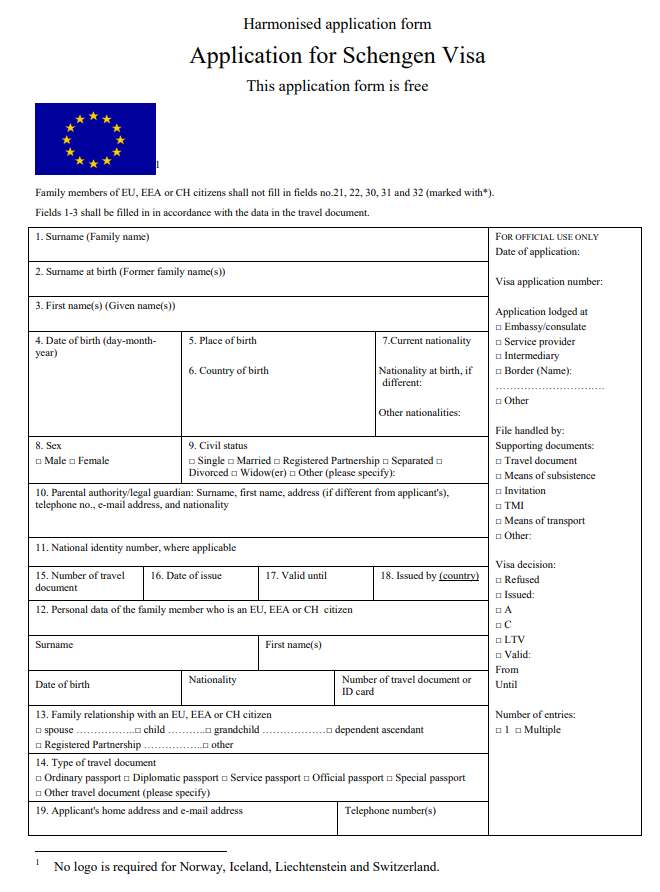


I paid a visa fee of 90 euros online and booked an appointment at VFS in Vancouver to submit the hardcopy documents.
I applied about 2 months to 6 weeks before my intended travel date, and the processing time took about 5 days. This does not include the 1-2 days they used to request extra documents from me.
Typically, Schengen visas are quick, but there are always outliers.
When submitting your documents at VFS, try to go with all you need, including photocopies, because they will charge a premium to photocopy or print.
Don’t take bags with you and ensure you do not require anything on your phone during that period, as they operate a no phone policy – you have to step out if you need to use your device.
Applying for a Schengen visa from Canada might seem like a lot at first, but once you understand the process and gather the right documents, it becomes much more manageable. Whether you’re visiting family, exploring new cities, or going on a business trip, this visa opens the door to multiple European destinations with ease. I hope this guide gives you clarity and confidence as you start your application.
Here’s to smooth travels and exciting adventures ahead!


 Call Me Ajala
Leave your comments here!